Why the proposed soft drinks levy has put jobs, investment and public health in conflict

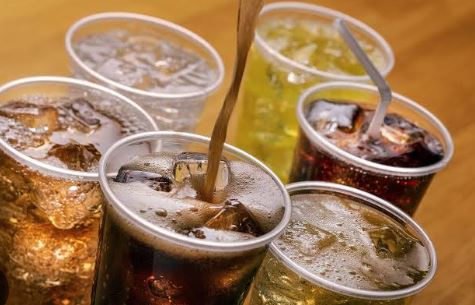
Nigeria’s proposed overhaul of the tax on sugar-sweetened beverages is facing resistance from manufacturers and labour unions, as concerns grow over whether a higher tax burden could undermine industrial activity without delivering the expected public health benefits.
The National Union of Food, Beverage and Tobacco Employees (NUFBTE) has urged the House of Representatives to withhold its approval of the Customs, Excise Tariff, etc. (Consolidation) Act (Amendment) Bill, 2025, arguing that the proposed levy could intensify pressure on manufacturers already grappling with rising operating costs and weakening consumer demand.
In an open letter to the Speaker of the House of Representatives, Tajudeen Abbas, the union’s president, Garba Dankama, warned that the proposed change could trigger further factory closures, job losses and disruption across the beverage industry’s supply chain.
The bill, sponsored by Senator Ipalibo Banigo, was passed by the Senate at third reading on June 4, 2026. It is awaiting concurrence by the House of Representatives and has not yet become law.
Why manufacturers and workers are concerned
At the centre of the opposition is a proposed change in how sugar-sweetened beverages are taxed. Under the existing arrangement described in the proposal, manufacturers pay an excise duty of N10 per litre. The bill seeks to replace this flat charge with a levy calculated as a percentage of retail prices, with the rate to be determined by the Minister of Finance.
For manufacturers and workers, the concern is that a percentage-based levy could increase the industry’s tax exposure at a time when businesses are already under considerable financial pressure.
Dankama identified high borrowing costs, rising energy and transportation expenses, foreign exchange constraints and declining consumer spending as some of the challenges facing beverage producers. He also said some companies had reduced or suspended production on certain lines.
According to the union, introducing an additional tax burden under these conditions could make it more difficult for manufacturers to sustain production and retain workers.
The implications, it argued, would extend beyond factories. The non-alcoholic beverage industry supports employment across agriculture, logistics, distribution and retail. Any contraction in production could therefore affect businesses and workers throughout the value chain.
Dankama warned that the sector could face “a wave of further closures, retrenchments, and value chain collapse” if the proposed levy compounds existing difficulties.
The union also maintained that the industry’s employment contribution must be considered in assessing the broader economic consequences of the bill. It claimed that more than one million people depend on the industry’s supply chain, although the figure was not independently verified in the information provided.
Why the tax debate extends beyond manufacturers
The controversy highlights a wider policy question: how can the government pursue public health objectives without placing additional pressure on businesses, workers and consumers already affected by economic reforms?
Supporters of the proposed levy argue that the existing N10-per-litre duty has lost some of its effectiveness because inflation has eroded its real value. In the Senate’s assessment, the fixed charge no longer provides a sufficient deterrent to excessive sugar consumption or generates adequate revenue.
A levy linked to retail prices could potentially increase revenue as prices change. However, its eventual impact on manufacturers and consumers would depend on the percentage rate adopted, how businesses respond and the extent to which additional costs are passed on to buyers.
For beverage producers, the concern is that higher production and tax costs could weaken profitability and discourage investment. Consumers could also face higher retail prices if manufacturers and distributors pass on some of the additional burden.
These are among the issues lawmakers will have to consider before deciding whether the proposed framework offers a workable balance between revenue generation, public health and economic sustainability.
Why the health argument remains central
The proposed tax is intended to help address diseases associated with excessive sugar consumption, including diabetes, obesity and hypertension.
The Federal Ministry of Health has reported that about eight per cent of Nigerians, estimated at roughly 18 million people, live with diabetes. This figure underscores the scale of the health concern behind efforts to reduce the risks associated with unhealthy diets.
However, NUFBTE’s president questioned whether placing a higher tax on soft drinks would adequately address the problem. He argued that soft drinks account for only about five per cent of the sugar consumed by Nigerians.
That assertion, which was presented by the union as part of its opposition to the bill, raises a question about how much influence beverage taxation alone can have on national sugar consumption. The figure would need to be assessed against reliable dietary data before it could establish the likely effectiveness of the proposed measure.
A beverage levy may be intended to discourage consumption through higher prices, but its overall public health impact would depend on how consumers respond, whether they switch to other products and whether the resulting revenue supports effective health interventions.
Part of the revenue generated under the proposed framework is expected to support disease prevention, health promotion, primary healthcare and health insurance for vulnerable Nigerians.
The policy debate therefore involves two related questions: whether the levy can meaningfully influence consumption patterns and whether the revenue it generates can strengthen healthcare delivery.
Why business groups are joining the opposition
The Centre for the Promotion of Private Enterprise has also called on the House of Representatives to reject the bill. The Manufacturers Association of Nigeria, the Nigeria Employers’ Consultative Association and the Abuja Chamber of Commerce and Industry have raised concerns that a percentage-based levy could increase production costs and discourage investment.
Their objections reflect broader concerns about the operating environment for Nigerian businesses, particularly the cumulative effect of taxation, financing costs, energy expenses and weak purchasing power.
For companies making products purchased frequently by households, the ability to maintain sales volumes is closely linked to consumers’ disposable income. If higher costs lead to price increases, manufacturers could face pressure on demand, although the extent of any effect would depend on pricing decisions and consumer behaviour.
Nevertheless, opposition from business groups does not, on its own, establish that the proposed levy would necessarily cause factory closures or widespread retrenchment. Those outcomes would depend on the final tax rate, market conditions and how businesses adjust.
Why the proposal still has supporters
Despite the concerns raised by labour and business groups, the proposal has received support from public health advocates.
Corporate Accountability and Public Participation Africa has welcomed the bill and urged the House of Representatives to approve it without delay.
For supporters, the central argument is that taxation can be used to discourage consumption of products associated with health risks while generating funds for healthcare programmes. They also argue that a fixed levy can lose its effectiveness over time when inflation reduces its purchasing power.
The disagreement, therefore, is not simply about whether sugar consumption poses a health concern. It is also about which policy instrument is most effective, how the tax should be structured and how its economic consequences should be managed.
A decision to increase the levy would need to be assessed against evidence of its likely effects on consumption, public revenue, household spending and industry activity. Equally, rejecting the proposal would leave lawmakers with the question of what alternative measures could achieve the stated health objectives.
What the House of Representatives must weigh
With the bill awaiting the House of Representatives’ concurrence, lawmakers face competing concerns involving public health, employment, investment and government revenue.
For NUFBTE, the priority is preventing additional pressure on an industry that it says is already struggling to maintain production and protect jobs. For supporters of the levy, the priority is strengthening the tax’s ability to discourage excessive sugar consumption and finance public health interventions.
The final outcome will depend partly on the details of the proposed levy, particularly the rate, its implementation and the safeguards, if any, introduced to address its economic effects.
The House must also consider whether the proposed tax is likely to change consumer behaviour sufficiently to justify its potential costs and whether the revenue generated will be directed effectively towards healthcare.
Ultimately, the debate goes beyond the taxation of soft drinks. It concerns how Nigeria can design public health policies that address preventable diseases while accounting for the realities facing manufacturers, workers and consumers.
The challenge for lawmakers is to determine whether the proposed levy can meet its health objectives without creating disproportionate economic consequences—and whether adjustments to the bill could better balance those competing priorities.
Do you support this levy?