Beyond the campaign trail: Why ARCON is tightening the rules on political advertising ahead of 2027

By Tunji Faleye
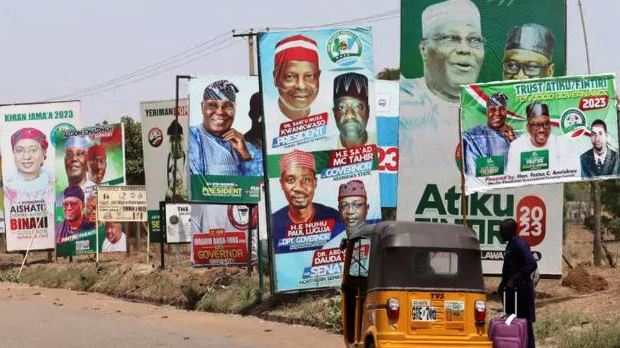
As Nigeria moves towards the 2027 general elections, the battle for voters’ attention is expected to extend beyond rallies, posters, billboards and television commercials. Social media platforms, influencers, online videos and digitally distributed campaign messages are increasingly important channels through which political actors communicate with the electorate.
But as the avenues for political campaigning expand, so does the challenge of ensuring that campaign messages meet established advertising standards.
This is the concern confronting the Advertising Regulatory Council of Nigeria (ARCON), which has warned political parties, campaign organisations, advertising agencies and media platforms against exposing political advertisements without the required approval. The council says violations could attract regulatory sanctions and prosecution.
The warning, delivered at a stakeholders’ engagement on political advertising regulation on Tuesday, October 20, 2026, at D’Podium Event Centre, Ikeja, Lagos, highlights a broader question about the conduct of political communication in an increasingly digital electoral environment: how can campaign messages reach voters freely while remaining within the boundaries of the law?
For ARCON, the answer lies in compliance with existing regulations, irrespective of the platform used to distribute an advertisement or the political influence of the advertiser.
When political messaging becomes a regulatory concern
Political advertising occupies a sensitive position in the marketing communications industry. Unlike ordinary commercial advertisements, campaign messages are often designed to influence public opinion on issues of governance, leadership and national development.
Their implications can therefore extend beyond the interests of the candidate or political party paying for them.
Recognising this wider responsibility, ARCON Director-General, Dr Olalekan Fadolapo, who also represented the Minister of Information and National Orientation, said the stakeholders’ engagement was organised to familiarise political actors with the rules governing political advertising.
Fadolapo explained that political advertising was not solely an industry concern, noting that the participation of other ministries, departments and agencies reflected its broader implications for society, elections and public order.
He said ARCON’s mandate was to ensure that advertising remained “legal, decent, truthful and responsible,” particularly during politically sensitive periods.
“However, the violation during political season is unimaginable. This calls for a strict regulation of that environment. It is our responsibility to ensure full compliance with the law,” he said.
The director-general reiterated that advertisements must be submitted to ARCON for approval before exposure, whether they appear in traditional media or on newer digital platforms.
The position means that political campaign teams must consider regulatory approval as part of the advertising process, rather than treating it as a final administrative step after campaign materials have been produced or scheduled for publication.
The digital challenge: One message, multiple audiences
The expansion of digital media has complicated the task of regulating political advertising. A campaign message can now move across websites, social media accounts, messaging channels and influencer networks, potentially reaching large audiences in a short time.
For regulators, this raises questions about how political advertising standards should apply when content is distributed across different platforms and through multiple intermediaries.
Delivering the keynote address, Director-General of the Center for Media Law & Development (CMLD), S. Charles Odenigbo, described political advertising as one of the most volatile areas of Nigeria’s advertising industry.
He argued that the rapid transformation of the advertising ecosystem had strengthened the case for regulation, rather than made it less necessary.
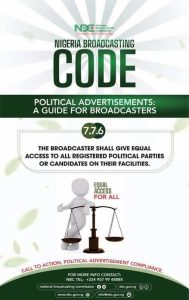
According to Odenigbo, the Advertising Regulatory Council of Nigeria Act, 2022, the Nigerian Code of Advertising Practice, the Electoral Act, the Nigeria Broadcasting Code and relevant electoral guidelines collectively establish obligations for political advertisers.
He said prior approval from the Advertising Standards Panel (ASP) was required before political advertisements could be exposed to the public.
The requirement, he explained, covers billboards, radio and television jingles, newspaper advertisements, social media content and other marketing communication materials.
Odenigbo also drew attention to Article 85 of the Nigerian Code, which extends advertising regulation to internet-based and digital media.
Consequently, political advertising distributed through websites, blogs, X, Instagram, YouTube, TikTok, WhatsApp channels, podcasts and other digital platforms remains subject to the applicable regulatory requirements.
For political consultants, campaign organisations and influencers, the implication is that the choice of platform does not, in itself, remove the responsibility to comply with advertising rules.
Artificial intelligence adds another layer
The growing use of artificial intelligence-generated content and political data analytics is introducing additional considerations into campaign communication.
Digital tools can help political organisations develop content and communicate with specific audiences. However, their use also raises questions about the truthfulness, verifiability and identification of sponsored messages.
Odenigbo said influencers, political consultants, campaign organisations and candidates using digital platforms must ensure that political content is truthful, verifiable and properly identifiable where it constitutes sponsored communication.
The regulatory concern is not limited to the technology used to produce an advertisement. It also encompasses the message being communicated and the obligations attached to its distribution.
As political campaigns make greater use of digital tools, advertising practitioners and campaign teams will need to account for regulatory requirements when developing and distributing their materials.
Why advertising agencies and media owners matter
Political advertisers do not operate in isolation. Advertising agencies may develop campaign materials, while broadcasters, publishers, outdoor advertising operators and digital platforms provide channels through which those materials reach the public.
This creates shared points of responsibility across the advertising value chain.
Odenigbo urged media organisations to refuse to air or publish unapproved political advertisements, regardless of whether the advertiser was a powerful politician, governor or well-funded campaign organisation.
He also called on advertising agencies to advise their political clients on their legal obligations rather than simply execute instructions.
State signage and advertising agencies, meanwhile, were urged to align their regulations with applicable federal standards. Odenigbo also called for impartial enforcement by security agencies, irrespective of the political party or candidate involved.
These responsibilities could become particularly important as campaign activity increases and political advertisers seek to secure media placements within tight timelines.
ARCON has already issued warnings in February and August 2026 over the exposure of unapproved political advertisements, including materials allegedly involving violations of religious and ethnic guidelines.
According to Odenigbo, the February warning addressed what ARCON described as illegal and ultra vires directives issued by some state signage and advertising agencies concerning the submission and vetting of political advertisements. The August statement urged political actors to exercise caution.
The previous warnings suggest that the regulator’s current message is part of an ongoing effort to reinforce compliance ahead of the elections.
Beyond advertising rules: The search for peaceful elections
The debate around political advertising also intersects with concerns about the wider electoral environment, including responsible public communication and the need to support peaceful elections.
Representing the Independent National Electoral Commission (INEC), Badejo Babalolo said the commission needed the support of stakeholders to navigate the electoral process successfully.
“We need to survive this election and we need support, we don’t need hate speech,” Babalolo said.
His remarks reflected the importance of cooperation among electoral authorities, regulators, political actors and other institutions as preparations for the 2027 elections continue.
Assistant Commandant Segun Adeogun of the Nigeria Security and Civil Defence Corps (NSCDC), who represented the Commandant, Dayo Keshinro, also called for deliberations on measures that could support peaceful elections.
“As you know, police have been taking the lead during elections. I will encourage the forum to deliberate on what will make the election a peaceful one,” Adeogun said.
While advertising regulation and electoral security involve different responsibilities, both featured in the discussions about how political communication should be managed during the election period.
Regulation as an industry responsibility
For the advertising industry, the challenge is to ensure that compliance becomes an established part of professional practice rather than a requirement observed only when regulatory scrutiny intensifies.
Chairman of the Heads of Advertising Sectorial Groups (HASG), Lanre Adisa, said the industry remained committed to responsible and ethical political communication.
“As Chairman of HASG, I want to reaffirm our commitment to responsible, ethical and professional advertising,” he said.
“Regulation must be seen as an enabler of responsible communication, not merely an instrument of enforcement.”
Adisa called for a culture of responsible advertising that would continue beyond the 2027 election cycle.
“As we approach the 2027 election, regulation must be imposed and encouraged to comply,” Adisa said.
His position places emphasis on the role of professional standards and industry cooperation in supporting compliance, alongside the enforcement responsibilities of regulators.
Can approval keep pace with campaign demands?
One practical concern for political advertisers is the time required to secure approval for campaign materials, particularly when campaigns operate under demanding schedules.
Chairman of the Advertising Standards Panel, Dr Emmanuel Agu, explained that political advertisements follow the same basic vetting process applied to other advertising materials.
He said advertisers must submit their materials to the ASP, after which its 17-member committee assesses them against the applicable vetting guidelines.
Agu noted that the process is guided by Nigerian law and the ARCON Act 2022, particularly Section 53, which provides the legal framework for the Advertising Standards Panel.
He also disclosed that the ASP system provides for advertising materials to be vetted within four hours, a provision that could help campaign organisations plan their production and publication schedules.
The stated provision offers a practical consideration for political advertisers: approval requirements need to be incorporated into campaign planning rather than left until the point when an advertisement is ready for public exposure.
A test for political communication ahead of 2027
The stakeholders’ engagement brought together representatives of political parties, regulators, electoral authorities, security agencies, advertising sectorial groups, media organisations and advertising practitioners to examine the rules governing political communication.
As the 2027 elections approach, the challenge will be to translate the regulatory framework into consistent practice across traditional and digital media.
For ARCON, the central message is that political advertising remains subject to established standards regardless of the advertiser’s identity, the resources behind a campaign or the platform carrying its message.
For advertising agencies and media organisations, the engagement reinforces the importance of incorporating compliance into their work with political clients. For campaign organisations, it underlines the need to factor approval into the development and distribution of advertising materials.
Ultimately, the effectiveness of the regulatory framework will depend not only on the rules themselves, but also on how consistently stakeholders observe and enforce them throughout the campaign period.
Do you think regulation of political advertisements can free our political scene of hate speech?