Analysis: Why the Sustainable Finance Summit 2.0 matters for Nigeria and beyond

By Tunji Faleye
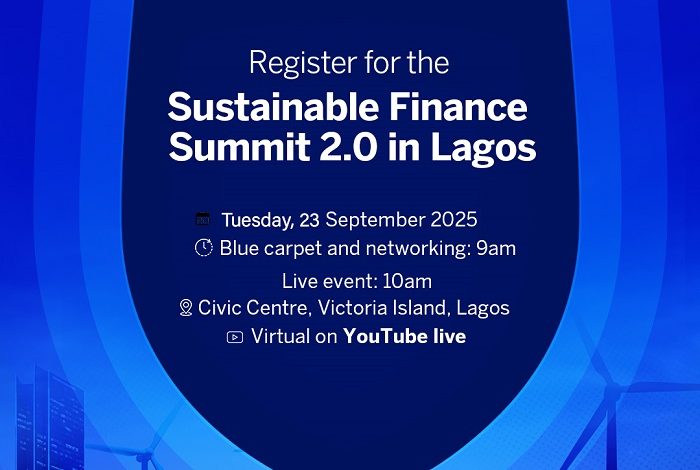
The announcement of the Sustainable Finance Summit 2.0 by Stanbic IBTC Holdings and the Lagos Business School Sustainability Centre goes beyond another corporate event in Lagos. It reflects a deeper movement within Africa’s financial and business ecosystem: the recognition that climate resilience, digital innovation, and artificial intelligence are no longer “future conversations,” but urgent levers for survival and competitiveness.
Nigeria, Africa’s largest economy, faces a paradox. On one hand, it remains heavily dependent on oil revenues and carbon-intensive industries; on the other, it is disproportionately vulnerable to climate shocks—flooding, desertification, and rising energy demands. By anchoring the summit in Lagos, organizers are signaling that Nigeria intends to position itself not only as a participant but also as a shaper of the sustainable finance agenda on the continent.
The theme—“Financing Resilience: Digital Innovation and AI for Climate-Smart Communities”—is telling. Traditional climate financing models often exclude vulnerable communities due to cost, accessibility, and bureaucracy. AI-driven tools, digital payment systems, and fintech solutions can help democratize access, streamline climate risk assessments, and unlock micro-investment opportunities. This indicates a shift away from elite-only financing toward more inclusive, tech-enabled models.
For investors, the summit represents more than “opportunities” in a generic sense. It suggests a realignment of portfolio priorities toward green assets and sustainable infrastructure, at a time when global capital increasingly attaches ESG (Environmental, Social, and Governance) conditions. Regulators, meanwhile, are under pressure to craft frameworks that balance innovation with risk oversight—something that will shape how quickly sustainable finance can scale in Nigeria.
The hybrid nature of the event also matters. By enabling participation from international stakeholders, Nigeria is deliberately positioning itself in global climate finance conversations. The risk, however, is whether discussions will translate into localized implementation—where communities see tangible benefits rather than theoretical frameworks.
Summits like these cannot be seen in isolation. They are litmus tests of whether Africa’s largest economy can transition from rhetoric to results in sustainability. If Stanbic IBTC and Lagos Business School succeed in convening cross-sector voices and sparking actionable commitments, the Sustainable Finance Summit 2.0 could be remembered as more than a high-profile event—it could be a catalyst for Nigeria’s emergence as a leader in climate-smart finance.
What’s your opinion about this story?