By Ayodeji Babatunde with World Bank report
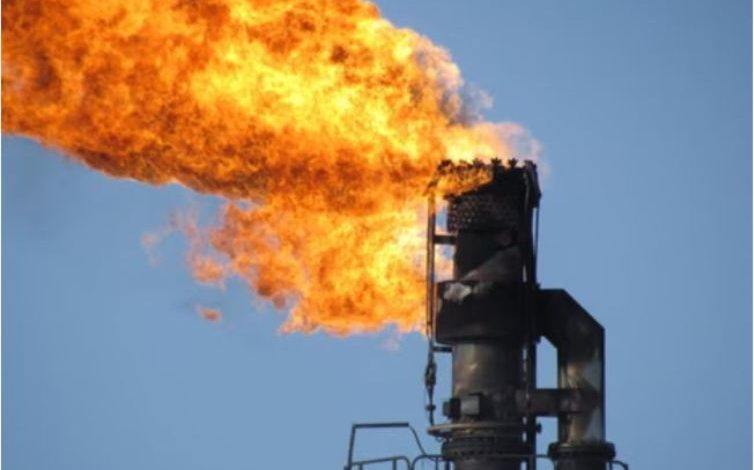
Global gas flaring increased for the third consecutive year in 2025, reaching its highest level in six years and highlighting the enormous economic and energy losses caused by the continued burning of associated gas.
According to the latest Global Gas Flaring Tracker, released by the World Bank‘s Global Flaring and Methane Reduction (GFMR) Partnership in collaboration with the Payne Institute at the Colorado School of Mines, about 167 billion cubic metres (bcm) of gas were flared worldwide last year. The volume is the largest recorded since 2019 and represents energy that could have been used to power industries, expand electricity access, support clean cooking initiatives, create jobs and reduce dependence on fuel imports.
The annual report offers an independent assessment of worldwide gas flaring levels, intensity and emerging trends, while drawing attention to the economic and environmental costs of the practice.
Billions of dollars literally burned away
The report estimates that the gas flared in 2025 had a market value of approximately US$54 billion, underscoring the enormous financial losses incurred annually by oil-producing countries.
Researchers noted that ending routine gas flaring globally would require between US$70 billion and US$100 billion in capital investment. Although this is a significant amount, it is only about twice the value of the gas currently wasted each year, making the investment economically justifiable over time.
The report argues that the primary obstacles are no longer technological. Instead, weak regulations, inadequate infrastructure, underdeveloped gas markets, limited access to investment capital and insufficient political commitment continue to delay meaningful progress.
Energy that could transform communities
The report describes the scale of wasted energy as extraordinary. The 167 bcm of gas burned off in 2025 exceeded the volume of liquefied natural gas (LNG) transported through the Persian Gulf during the same period. It is also equivalent to Africa’s total annual natural gas consumption.
Rather than being destroyed through flaring, the gas could have been harnessed to improve electricity supply, strengthen industrial productivity, reduce expensive fuel imports and provide cleaner cooking alternatives for millions of households that still lack reliable energy access.
The report stresses that, at a time when many countries continue to struggle with energy shortages, allowing such a valuable resource to go up in flames represents a significant missed opportunity.
Strong link between energy access and employment
Beyond the environmental implications, the report highlights the economic consequences of inadequate energy infrastructure.
It points out that power shortages across Sub-Saharan Africa have been associated with a 14 percent decline in employment, illustrating the critical role reliable energy plays in supporting economic growth.
If the gas currently flared worldwide were captured and converted into electricity, it could generate an estimated four billion kilowatt-hours of power, providing meaningful improvements in electricity supply for underserved communities.
For oil-producing nations, reducing flaring would deliver multiple benefits, including increased government revenues, expanded energy access, stronger industrial development and greater employment opportunities.
Solutions already exist
Despite the persistent rise in global flaring, the report identifies several countries that have demonstrated that substantial reductions are achievable.
The United States recorded the largest absolute decline in flaring during 2025, cutting emissions by approximately 0.4 bcm, representing a seven percent reduction. Much of this progress was attributed to the commissioning of the Matterhorn Express pipeline in the Permian Basin, which expanded gas transportation capacity and reduced the need for flaring.
Similarly, Kazakhstan has reduced gas flaring by an impressive 87 percent since 2012, driven by stronger government oversight, sustained regulatory enforcement and strategic investments in supporting infrastructure.
According to the report, these examples demonstrate that meaningful progress is possible when governments and industry work together to strengthen infrastructure, enforce regulations and prioritise investments in gas utilisation.
Summing up its findings, the report maintains that the technologies, financing options and policy tools required to eliminate routine flaring are already available. What remains lacking, it says, is the political will, regulatory commitment and coordinated investment needed to transform wasted gas into economic value, improved energy security and long-term development.
What’s your opinion on this story?