NIMN, LBS report offers strategic insights for businesses, entrepreneurs, policymakers


By Ayodeji Babatunde
The National Institute of Marketing of Nigeria (NIMN), in collaboration with Lagos Business School (LBS), has launched a comprehensive Consumer Insight Report designed to provide businesses, entrepreneurs and policymakers with practical, data-driven intelligence for navigating Nigeria’s rapidly evolving consumer landscape.
Titled Community, Culture, and Connection: Re-imagining the New Market, the report presents extensive research into the changing behaviours, expectations and purchasing patterns of Nigerian consumers, offering strategic recommendations for organisations seeking sustainable growth in a dynamic marketplace.
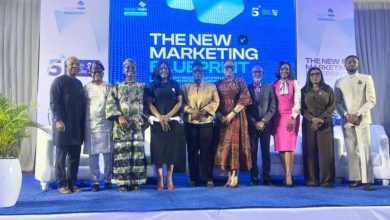
Speaking at the unveiling ceremony attended by marketing professionals, business leaders and members of the media, NIMN Registrar, Thelma Okoh, described the publication as an independent and forward-looking guide for understanding the future of commerce in Nigeria.
“When we speak of community, culture, and connection, we are speaking the very language of Nigeria,” Okoh stated. “In Nigeria, community is our safety net and our launchpad. The ‘New Market’ is no longer just a physical space or a digital platform; it is a communal ecosystem where trust is the primary currency. Nigerian consumers do not just buy products; they buy into stories, identities, and heritage.”
According to the institute, one of the key motivations behind the study was to address the longstanding shortage of credible, locally generated consumer data capable of supporting informed business and policy decisions.
Presenting highlights of the findings, Emmanuel Adediran said the research was undertaken to test widely held assumptions about Nigerian consumers while capturing authentic market sentiment.
“The narrative that Nigeria does not have data has to change,” Adediran noted.
Among its major findings, the report reveals a shift in the effectiveness of influencer marketing. While influencer collaborations remain valuable, consumers are increasingly placing greater trust in micro- and nano-influencers than in mainstream celebrity personalities.
The research also draws a distinction between conventional social media influencers and community leaders who enjoy deeper credibility and stronger relationships with their audiences. It recommends that organisations move beyond transactional endorsements by engaging trusted grassroots voices or developing communities around their own brands.
Explaining the inspiration behind the initiative, NIMN President, Dr. Bolajoko Bayo-Ajayi, said the report originated from discussions during preparations for the institute’s annual conference, with the aim of creating a lasting body of knowledge that would continue to benefit the marketing profession beyond the event.
“We established a strategic town and gown partnership with the Lagos Business School to ensure that what is being taught in the classroom truly resonates with today’s market reality,” Dr. Bayo-Ajayi explained.
To ensure broad national representation and credible outcomes, the study combined focus group discussions with in-depth interviews involving consumers and corporate organisations across Nigeria’s six geopolitical zones.
The launch also featured a panel discussion moderated by Dr. Omotola, during which industry experts examined the report’s implications for businesses operating in today’s challenging economic environment.
Professor Uchenna Uzo, Deputy Vice Chancellor (Academic), Pan-Atlantic University, described the publication as timely, noting that organisations are contending with economic uncertainty, political transitions, election cycles and fluctuations in petroleum prices.
He pointed to one of the report’s notable findings, which exposes a significant disconnect between marketers and consumers. According to the research, only 30 per cent of consumers believe brands are engaging them effectively, while 60 per cent of marketers believe they are meeting customer expectations.
To close that gap, Professor Uzo advocated a customer co-creation approach that gives consumers a more active role in shaping products, services and experiences.
“Consumers want to feel like they are part of the board,” he observed, adding that businesses must rethink, redesign and innovate their customer experience strategies to remain competitive.
Now available to industry stakeholders, the Community, Culture, and Connection report is expected to serve as a valuable reference for organisations seeking deeper consumer understanding and more effective market engagement in Nigeria.