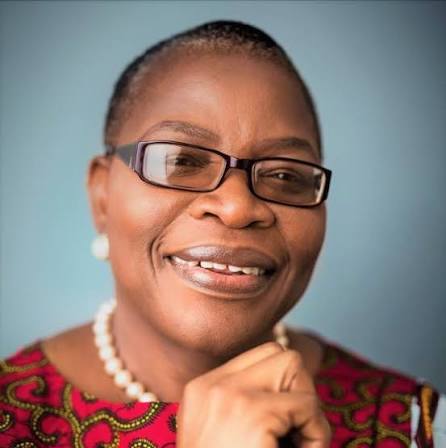
Former Minister of Education and #FixPolitics founder, Dr Obiageli Ezekwesili, has called on President Bola Tinubu to halt and cancel Nigeria’s £746 million ports financing agreement with the United Kingdom, describing the transaction as opaque and potentially damaging to the country’s economic interests.
Ezekwesili, who chairs the School of Politics, Policy and Governance, made the call in a statement in which she criticised the Federal Government for failing to publicly disclose the terms of the agreement more than five months after it was signed.
According to her, the financing arrangement was signed by President Tinubu at Windsor Castle 152 days ago, yet neither the Nigerian nor British government has released comprehensive details of the deal to the public.
She urged Nigerians to demand greater transparency, warning that the financial obligations arising from the agreement could eventually be borne by future generations.
Ezekwesili argued that Nigeria’s worsening debt burden makes additional sovereign borrowing particularly concerning. She said the country’s public debt had risen from about N87 trillion in May 2023 to more than N152 trillion, while debt servicing consumes over 60 per cent of government revenue.
The former World Bank vice president also criticised the government’s borrowing strategy, claiming that annual borrowing had increased significantly under the Tinubu administration.
She linked this to the government’s proposed $21.45 billion external borrowing programme, which she said was approved without adequate public scrutiny.
Concerns over UK-backed financing
Ezekwesili said the £746 million ports financing was not a grant or aid package but a sovereign debt arrangement involving Citibank London and UK Export Finance (UKEF).
She further claimed that the structure of the agreement gives significant opportunities to British companies, with at least £236 million reportedly earmarked for UK suppliers.
According to her, British Steel has secured a £70 million contract connected to the project, raising questions about whether Nigeria is assuming the financial burden while British companies benefit from the associated contracts.
She said important details, including the applicable interest rate and repayment schedule, have not been adequately disclosed.
Ezekwesili also noted that civil society organisations, including SEREC and BudgIT, alongside opposition political parties, had demanded access to the agreement but had yet to receive what she described as a satisfactory response.
She said the transaction documents had not been made publicly available by relevant Nigerian agencies, including the Ministry of Finance and the Nigerian Ports Authority, or by UKEF.
Apapa, Tin Can ports should attract private capital
The former minister identified currency exposure, procurement concerns and what she described as policy shortcomings as major issues surrounding the deal.
She questioned why the government chose sovereign borrowing to finance the rehabilitation of Apapa and Tin Can Island ports, arguing that both facilities could attract private investment through an appropriately designed concession framework.
According to her, the ports’ commercial potential makes them suitable for private capital rather than additional government-backed debt.
Ezekwesili maintained that Nigeria should have considered alternative financing and concession models that would protect the country’s interests while attracting investment.
She consequently urged President Tinubu to cancel the agreement and immediately suspend any further drawdowns associated with it.
She also called for the Federal Government to return to the National Assembly with a transparent and competitive concession framework for the two ports, developed with the assistance of an independent transaction adviser.
Calls for disclosure
Ezekwesili further urged civil society organisations to intensify efforts to obtain the details of the transaction through Freedom of Information requests.
She called for requests to be submitted to the Ministry of Finance, the Nigerian Ports Authority and the Office of the Attorney-General of the Federation, while also urging campaigners to explore the UK’s Freedom of Information framework to obtain relevant documentation from UKEF.
She acknowledged the urgent need to improve the performance of Nigeria’s ports, particularly Apapa and Tin Can, but argued that the need for infrastructure development should not justify a lack of transparency.
According to Ezekwesili, Nigerians have a right to know the terms of loans contracted in their name and should not be left with financial obligations arising from agreements whose details remain undisclosed.
She warned that continued secrecy surrounding the transaction could deepen public distrust in the government’s borrowing and infrastructure policies.
Ezekwesili said the controversy should also be viewed within the broader context of accountability and public resource management, arguing that Nigeria’s economic and governance challenges require greater transparency rather than less.
She therefore called on Nigerians to continue demanding disclosure of the agreement, saying public attention should not be allowed to fade until the full details of the transaction are made available.
What’s your opinion on this story?