1,054 food sellers, waste workers trained as LASEPA, UNIDO, Govt of Japan conclude cholera response programme

By Tunji Faleye
No fewer than 1,054 food vendors and waste management workers have completed series of emergency capacity-building programmes organised to curb cholera outbreaks in Lagos State.
The initiative, which began in 2025, was jointly implemented by the Lagos State Environmental Protection Agency (LASEPA) and the United Nations Industrial Development Organization (UNIDO), with funding support from the Government of Japan.
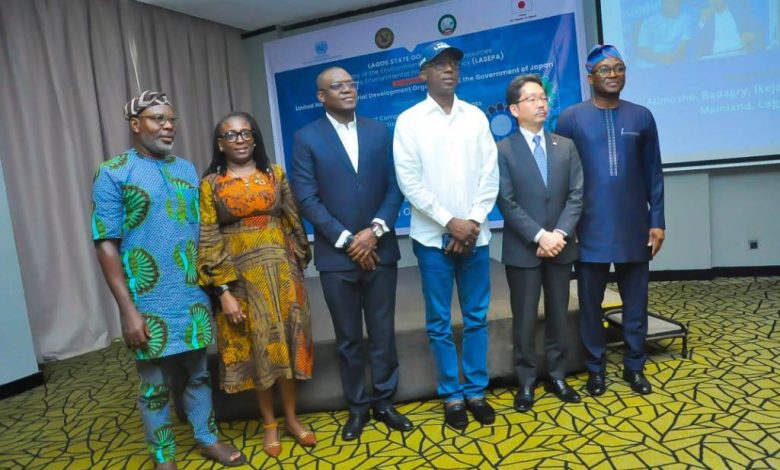
At the close-out and achievements presentation for Project 240236, the Honourable Commissioner for the Environment and Water Resources, Tokunbo Wahab, explained that the programme reflected strong cooperation among the Lagos State Government through LASEPA, UNIDO, and the Government of Japan under UNIDO’s development framework.
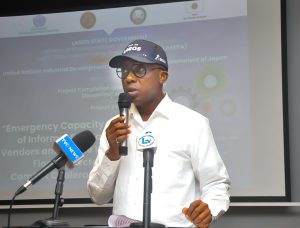
Image credit: LASEPA
He noted that the initiative was designed as a swift response to the cholera outbreak recorded in June 2024, when Lagos State reported 579 suspected infections and 29 deaths.
He said, “The impact of this intervention is measurable and encouraging. Between April 2025, when we commenced the capacity-building campaign and now, Lagos State has not recorded any new cholera outbreak in any part of the state. This remarkable achievement clearly demonstrates that the advocacy, sensitization, and technical training provided under this programme have been embraced and effectively implemented by the targeted communities.”
The General Manager of LASEPA, Babatunde Ajayi, described the initiative as evidence of productive collaboration between the agency and UNIDO, backed by funding from Japan.

Image credit: LASEPA
According to him, “Through this project, we strengthened grassroots engagement and delivered targeted capacity-building programmes focused on hygiene standards, safe food and water handling, waste management practices, and disease prevention measures. The intervention has enhanced our operational insight and expanded our reach within vulnerable communities where awareness of basic environmental health practices remains low.”
Mr Ajayi added, “The Government of Japan, through UNIDO, provided a technical grant of $225,000, which LASEPA applied to structured training sessions, advocacy campaigns, and field monitoring activities across the identified Local Government Areas. Beyond funding approval, UNIDO deployed experienced technical personnel who worked closely with our team throughout the implementation period, ensuring compliance, accountability, and measurable outcomes.”
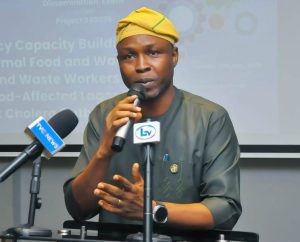
Image credit: LASEP
He assured stakeholders that the results of Project 240236 would be sustained, explaining that the state plans to integrate lessons learned, community partnerships, and operational systems developed through the project into ongoing environmental advocacy and enforcement programmes. The state government, he said, remains focused on preventing water-borne diseases, improving environmental compliance, and advancing sustainable sanitation practices.
Japan’s Ambassador to Nigeria, Hideo Suzuki, reaffirmed his country’s commitment to supporting interventions that address cholera and other water-borne diseases, citing Japan’s financial backing of the emergency training for food vendors and waste workers in Lagos.
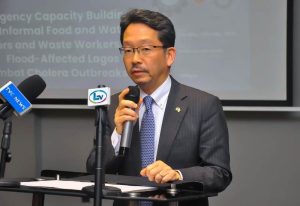
Image credit: LASEPA
Also speaking, Ambassador Philbert Johnson, Director and UNIDO Representative to Nigeria and ECOWAS, thanked partners for ensuring the programme’s success. He described Japan as a reliable development partner to Africa and Nigeria, and conveyed appreciation to the ambassador and the Government of Japan for funding the project.
One of the beneficiaries, Mrs Oyewole Anike, a waste worker, said she has already begun applying what she learned during the training and is passing the knowledge to colleagues who were unable to attend, particularly on the importance of strictly observing safety standards.
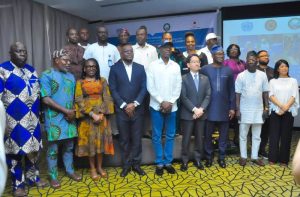
She expressed gratitude to the Lagos State Government, UNIDO, and the Government of Japan for providing the training opportunity.
What’s your impression about this story?