Beyond the Classroom: Lagos tertiary students tackle transboundary pollution at LASEPA debate

As part of efforts to address the growing challenges of environmental management in Africa’s most populous megacity, the Lagos State Environmental Protection Agency (LASEPA) on Tuesday hosted the Inter-Tertiary Environmental Summit 2.0.
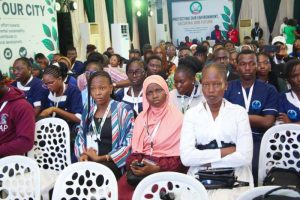
The event, which attracted students from public and private tertiary institutions across the state, focused on the challenge of transboundary pollution, placing young people at the centre of future environmental advocacy and policy discussions.
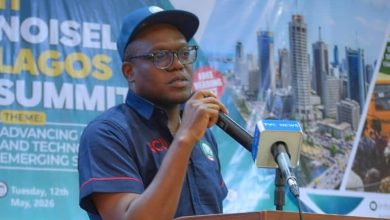
Speaking at the summit, the General Manager of LASEPA, Dr. Babatunde Ajayi, underscored the strong connection between environmental management and public health. According to him, engaging young minds remains one of the most effective ways of shaping long-term environmental policies and driving social change.
“The crux of environmental protection is for public health. The only reason there’s anything called environmental management is because the public health of the people is very key,” Dr Ajayi stated.
He explained that the agency adopted the debate format because of its ability to engage and influence the right audience. According to him, “Young people are the future of Nigeria and of Lagos. Anything you want to drive, anything you want to sell in the world, you must pass it through young people”.
Held at the Bero Auditorium in Ikeja, the summit featured the theme, “Combatting Transboundary Pollution in Lagos State: A City-Level Intervention or National Efforts.” The theme reflected the complexities of managing pollution that cuts across state and national boundaries.
Representing the Commissioner for the Environment and Water Resources, the Special Adviser to the Lagos State Government on the Environment, Engr. Olakunle Rotimi, stressed the importance of sustained intellectual engagement on environmental issues.
He said, “As environmental challenges continue to transcend geographical boundaries, it becomes increasingly important to encourage intellectual discourse on practical solutions.”
Engr. Rotimi noted that he was particularly impressed by the quality of research, analytical thinking, and innovative ideas demonstrated by the participating students.
According to him, their presentations confirmed that “the young people possess the capacity and creativity required to contribute meaningfully to environmental governance and policy development in the state.”
He also urged LASEPA to continue implementing government policies and programmes aimed at environmental protection, pollution control, and ecosystem preservation.
“The work you do remains critical to safeguarding public health and ensuring sustainable development”. He said.
Representing the Commissioner for Tertiary Education, the Permanent Secretary of the Ministry of Tertiary Education, Mr. Adeniran Kasali, agreed that the magnitude of environmental challenges demands more than local interventions. While acknowledging the importance of city-level enforcement measures, he maintained that “sustainable solutions can only be achieved through robust national policies, intergovernmental cooperation and collective responsibility”.
The intellectual atmosphere of the summit was further enriched by the Lead Debate Judge, Prof. Olarewaju A. Fagbohun, who challenged participants and guests to move beyond theoretical discussions and embrace personal responsibility for environmental protection.
Rather than focusing solely on judging criteria, Prof. Fagbohun engaged the audience in a conversation on how environmental offenders should be treated.
“Because we know pollution is not good and polluters are bad. Should they go to jail or should they be heavily taxed?” Prof. Fagbohun asked the students and guests.
He reminded the audience that environmental pollution often begins with individual actions, noting that “if you have disposed of food in your house in a way that is not good, you have polluted. So, you are either going to jail or you will be heavily taxed”.
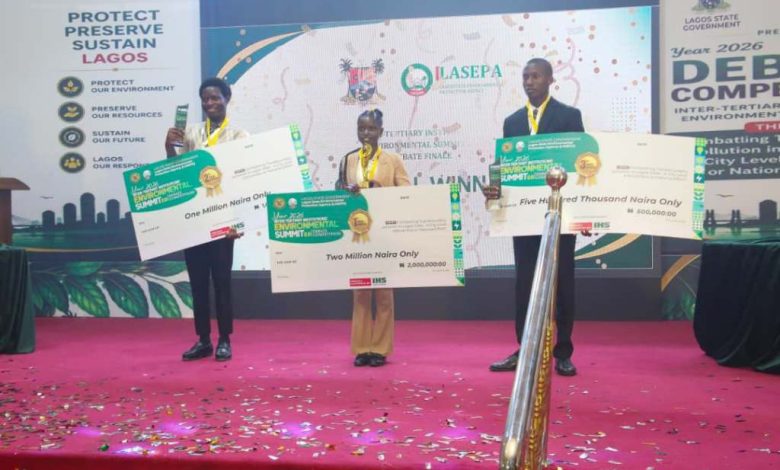
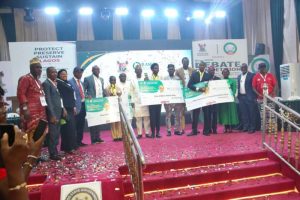
The competition showcased a high level of academic excellence, with Fajana Mary of Lagos State University (LASU) emerging as the overall winner and receiving a cash prize of N2 million.
Yakub Abdullahi and Daniel Oluwatise Akinkuwowo, both of the University of Lagos, secured second and third positions respectively, winning N1 million and N500,000.