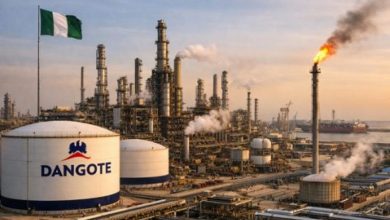
Dangote Petroleum Refinery and Petrochemicals is extending its free petroleum products delivery programme to Kano, Imo, Anambra and Nasarawa States as part of efforts to cut distribution costs and improve the pricing of petrol across Nigeria.
The expansion represents a strategic shift beyond simply increasing domestic fuel supply. By taking products closer to independent petroleum marketers and absorbing the associated transportation costs, the refinery is seeking to remove one of the major expenses that contributes to the final pump price of petrol.
The initiative initially covered Lagos, Ogun, Rivers, Kaduna, Abuja and Delta States. Its extension to additional states is expected to make it easier and less expensive for marketers operating outside the refinery’s immediate vicinity to access petroleum products.
Fatima Aliko Dangote, Group Executive Director, Commercial Operations, Oil & Gas, WAEP and Fertiliser, said the objective was to ensure that the gains from local refining translate into measurable benefits across the petroleum value chain.
According to her, domestic refining should not only improve product availability but should also help businesses and consumers save money by eliminating unnecessary costs associated with distribution.
The initiative has received support from the Independent Petroleum Marketers Association of Nigeria (IPMAN), which believes the arrangement could ease some of the financial pressures facing independent marketers.
IPMAN’s National Publicity Secretary and Public Relations Officer, Chinedu Ukadike, said transportation and delays in product loading have traditionally placed significant financial pressure on marketers.
He explained that marketers sometimes have substantial amounts of money tied up while waiting for products to be loaded and transported to their respective locations. The free delivery arrangement, he said, could help reduce such delays and improve marketers’ cash flow.
Ukadike noted that taking products closer to their intended markets also reduces the financial burden associated with long-distance transportation.
With marketers spending less on haulage and related logistics, there could be greater room for them to review their operating costs and potentially pass some of the savings to motorists through lower pump prices.
Why the expansion matters
The cost of transporting petrol remains an important component of downstream petroleum pricing, particularly for marketers supplying locations that are far from major sources of refined products.
Moving fuel over long distances involves several expenses, including haulage, vehicle maintenance, drivers’ costs, insurance, road-related risks and other logistics. When these costs are removed or reduced, the overall cost of supplying petrol to consumers can also decline.
The Dangote initiative therefore seeks to address the issue from the distribution end of the value chain.
Rather than leaving marketers to bear the full cost of moving products from the refinery to their markets, the refinery is absorbing the delivery expense in selected locations. This could make product distribution more efficient while reducing some of the pressure on marketers’ margins.
The programme could also help reduce the risks associated with transporting petroleum products across long distances, while improving the speed and reliability of supply to participating markets.
For independent marketers, particularly those operating in distant locations, the financial implications could be significant. Reduced transportation costs mean that more of their working capital can remain available for business operations rather than being consumed by logistics.
IPMAN has consequently called for the initiative to be extended to more parts of the country, especially additional northern markets where distance from refining and supply centres can significantly increase distribution costs.
Ukadike described the development as evidence of the potential benefits of increased competition and deregulation in Nigeria’s downstream petroleum sector.
Potential impact on pump prices
The key question for motorists is whether the reduction in distribution costs will eventually translate into cheaper petrol.
While the initiative does not automatically determine pump prices, lower logistics expenses give marketers more room to operate competitively. In a market where retailers compete for customers, reduced operating costs can create pressure to lower selling prices.
The development comes at a time when Nigeria’s downstream petroleum industry is adjusting to increased domestic refining capacity and changes in the structure of the fuel market.
Dangote Refinery, with a stated capacity of 700,000 barrels per day, has become a major source of refined petroleum products for the Nigerian market while also supplying international destinations.
Its free delivery programme adds a new dimension to the refinery’s role in the downstream sector. The focus is no longer only on producing petrol locally but also on reducing the cost of getting the product from the refinery to different parts of the country.
For consumers, the potential benefit is clear: if savings from free delivery are passed through the distribution chain, motorists could see greater competition among retailers and increased pressure for more affordable pump prices.
The expansion to Kano, Imo, Anambra and Nasarawa therefore signals an attempt to make the benefits of domestic refining extend beyond the refinery gate and deeper into Nigeria’s petroleum distribution network.